
Exploring Biblical Imagery: Sheep and Shepherding
Calling someone a “sheep” presents unique challenges in the modern West. In today’s charged political environment, to call someone a “sheep” is to call them a mindless follower and might elicit a fight.

Many biblical writers used sheep imagery to refer to God’s people, or to those God wants to rescue. Jesus commonly used sheep and shepherding imagery to make important points in His teaching. The comparison stings at times (especially when our behavior is compared to bad sheep behavior), but it is not meant as an insult like today. Sheep were an important part of ancient culture. Shepherds gave great care to their flocks, and their care for their sheep served as a helpful example of the care God gives His people.
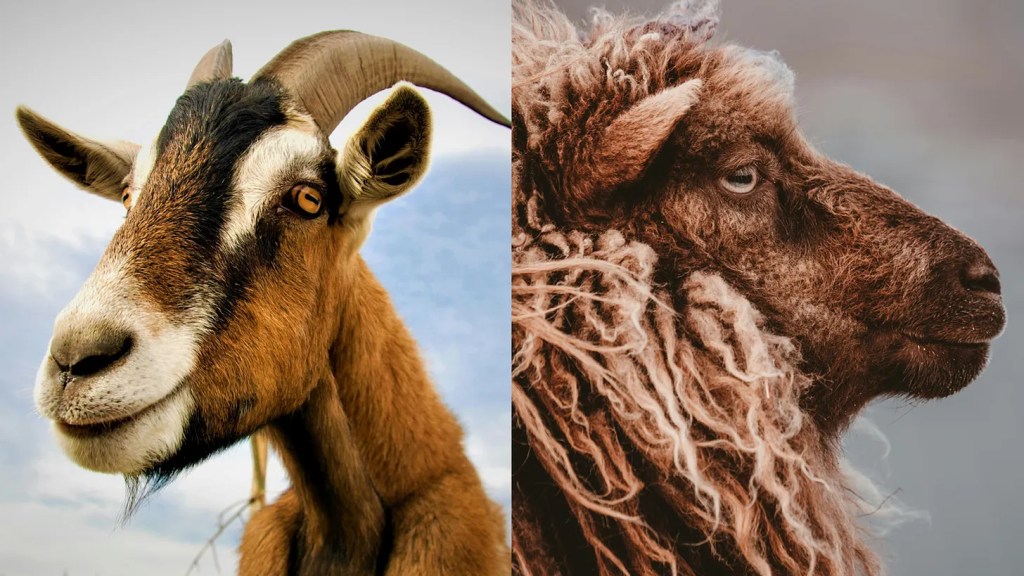
In Matthew 25, Jesus introduced the Parable of the Sheep and the Goats to describe the great gathering of the nations at the end of time. He said that God would separate people like a shepherd separates the sheep and the goats.
“When the Son of Man comes in his glory, and all the angels with him, then he will sit on his glorious throne. All the nations will be gathered before him, and he will separate them one from another, just as a shepherd separates the sheep from the goats. 33 He will put the sheep on his right and the goats on the left. – Matthew 25:31-33
Jesus’s parable instantly brought mental pictures in the minds of his listeners. For the people in Judea, even the city folks from Jerusalem, seeing a shepherd herding sheep and goats toward a pasture would have been a common sight. Some may have seen a shepherd separating the sheep and goats.
During my formative years, my family raised goats for a while, and later we raised sheep. I still have lingering trauma from drinking goat milk as a child. We did not have sheep and goats at the same time, though the practice of taking sheep and goats into the pasture to graze was common in Jesus’s day. Shepherds in modern Israel continue to run sheep and goats together.
However, sheep and goats do have different sheltering needs, and were separated for milking, shearing, breeding, and sales. So, when we read about this separation, we must understand that Jesus is simply pointing out types. Jesus is not drawing deep meaning from the behavior of sheep and goats. He is using a common practice of separating two types of animals to talk about this separation of two types of people, “when the Son of Man (a Messianic title from Daniel 7:13-14) comes in his glory.”
The “sheep” are gathered at the right of the Son of Man’s glorious throne, and the “goats” are placed on his left. All will appear before the “King” (Jesus). The text states that those on the right will be welcomed into eternal glory with the words: “Come, you who are blessed by my Father; inherit the kingdom prepared for you from the foundation of the world.”
The King then listed the right actions of the people on the right. The King said these people provided food when he was hungry, drink when he was thirsty, shelter when he was a stranger, and clothing when he was naked. The King said these righteous ones on the right had cared for him when he was sick and visited him when he was in prison.
The righteous were perplexed. They did not remember doing these things for the King. The King stated the following: “Truly I tell you, whatever you did for one of the least of these brothers and sisters of mine, you did for me.”
The ones on the left were given bad news by the King. He said, “Depart from me, you who are cursed, into the eternal fire prepared for the devil and his angels!” The reason? The ones on the left (the unfaithful; the goats) did not do all the things that the righteous did for the King. They were perplexed as well. They did not remember seeing the King in these situations. The King said, “Truly I tell you, whatever you did not do for one of the least of these, you did not do for me.”
The passage raises a number of questions. Were the righteous saved by their actions? Who are “the least of these brothers and sisters of mine”?
If we take into account the full teachings of Jesus, we discern that the righteous were not saved because of these actions, and the sins of omission did not make the unfaithful cursed. Instead, the behaviors illustrate the heart conditions of those on the right and those on the left. Jesus expected those who had committed themselves to him to act differently because of his transformation. He expected believers to give loving care to “the least of these brothers and sisters.”
The unfaithful cannot be true followers of Jesus. Jesus promised to keep all of those who truly followed him.
Who are the brothers and sisters? The church. Other followers. Jesus’s followers have ample reasons to treat everyone with loving kindness. Jesus greatly expanded the term “neighbor” and expected his followers to love even their enemies. But in this passage, Jesus encourages believers to love one another and care for one another. We know this due to the familial language. Throughout the New Testament, the writers often identify other believers using familial words. A wonderful academic volume by Paul R. Trebilco, Self-designations and Group Identity in the New Testament, explores this topic in great detail.
In this case, Jesus isn’t drawing on sheep and goat behavior to make a point. Here, Jesus uses a common scene in the land to illustrate his eternal point. There are only two types of people—those who were with him and those who were not. Sheep stand in for his followers, and goats stand in for the unfaithful—those who are not committed to him.


Leave a Reply